

1,501 Pregnancies Among Girls Aged 10–14 : FAWE Ghana Calls for Urgent Action to Protect the Girl Child
Accra, Ghana – 23 September 2026 – The Forum for African Women Educationalists (FAWE) Ghana is deeply concerned by data released by the Ghana Health Service (GHS) showing that 53,415 adolescent pregnancies were recorded at health facilities between January and July 2026, including 1,501 pregnancies involving girls aged 10–14 years.
For FAWE Ghana, the figure involving girls aged 10–14 is particularly alarming. These are children who should be protected, and who are learning and developing their potential—and should not face the physical, emotional, social and economic consequences associated with early pregnancy. They need to enjoy their childhood and grow gradually into adulthood and should not be rushed into motherhood as being reported here.
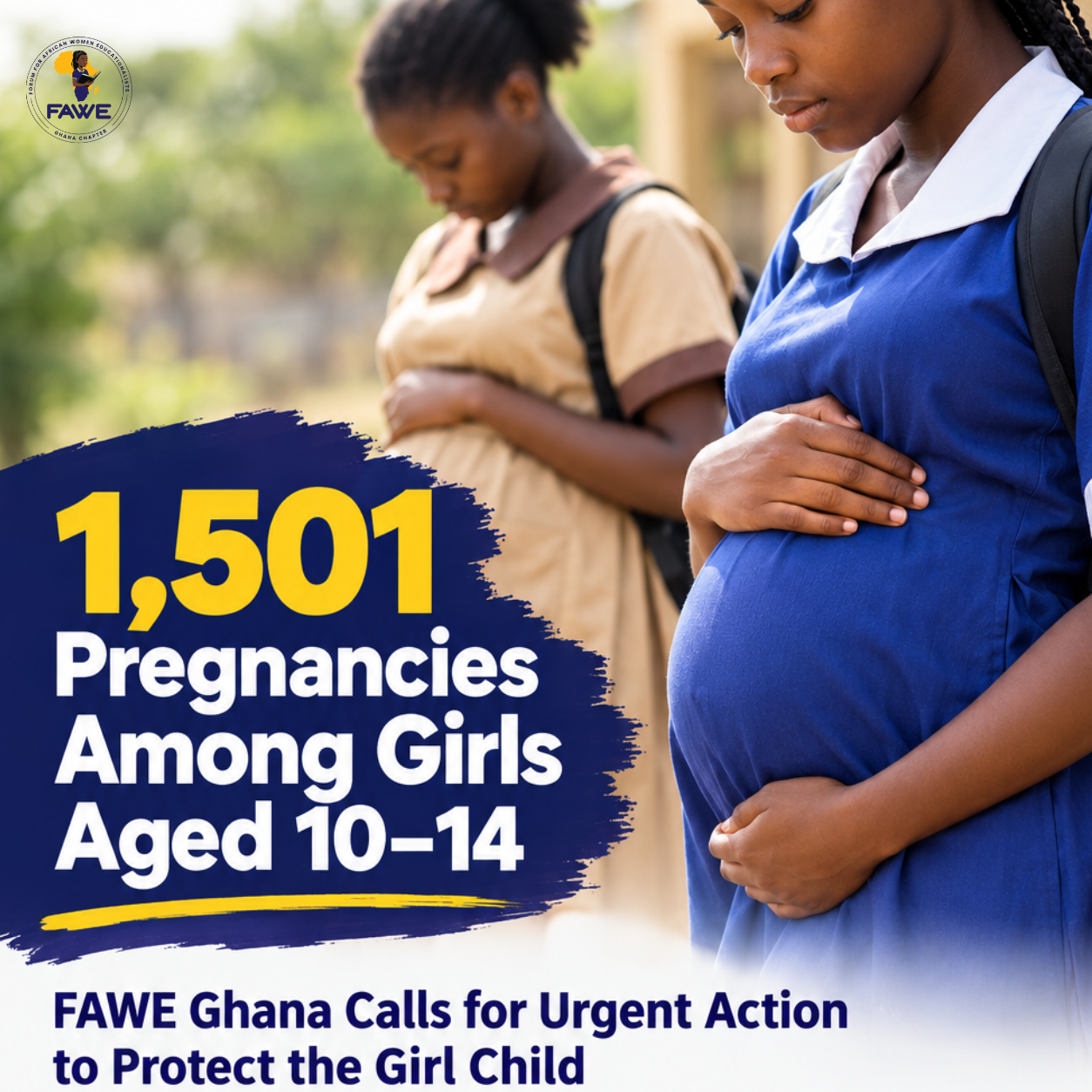
While the GHS data does not establish the circumstances surrounding each pregnancy, pregnancies involving children of this age must be viewed through the lens of child protection, safeguarding and access to justice, alongside health and education.
A threat to girls’ education and Ghana’s development
Adolescent pregnancy is not only a health concern; it can significantly disrupt a girl’s education and future aspirations and opportunities. UNICEF notes that poverty, gender inequality and other structural barriers continue to affect girls’ ability to remain in school, while early pregnancy can further limit educational and economic pathways.
Ghana has made progress through its Guidelines on Prevention of Pregnancy and Facilitation of Re-entry into School After Childbirth, which provide a pathway for pregnant girls and young mothers to return to education. However, the existence of a policy must be matched by effective implementation and enforcement, adequate resources and support at the school and community levels. FAWE Ghana therefore believes that pregnancy must not become the end of a girl’s education or her opportunity to build a productive future.
FAWE Ghana calls for urgent action
FAWE Ghana calls on Government and all relevant stakeholders to strengthen a coordinated national response that includes:
1. Strengthening child protection: Girls, particularly those below 16, must be protected from sexual abuse, exploitation, violence and other forms of harm. Where criminal offences are suspected, appropriate child-sensitive reporting, investigation and justice mechanisms must be activated.
2. Keeping girls in school: Schools and communities must identify girls at risk of dropping out of school and provide appropriate counselling, mentorship and support. Pregnant girls and young mothers must be supported to return to and complete their education without stigma or discrimination.
3. Expanding adolescent-friendly health services: Young people need access to accurate, age-appropriate information, counselling and adolescent-responsive health services. Prevention efforts must begin early and reach both in-school and out-of-school adolescents.
4. Addressing poverty and vulnerability: Economic hardship, social norms and limited opportunities can increase girls’ vulnerability. Social protection, scholarships, skills development and livelihood interventions must therefore form part of the response.
5. Give adolescent girls a second chance Early pregnancy and Childbirth should not end the dream and future of an adolescent girl. They should be given another chance with the necessary support to enable them return to school. Their parents, guardians and relatives can adopt the babies after delivery for the adolescent girls to return to school. They should not be forced into early marriages to the men/boys who impregnated them nor should they be forced into cohabiting relations with such persons.
6. Engaging boys, men, parents and communities: The responsibility for preventing adolescent pregnancy cannot rest on girls alone. Boys and men must be actively engaged in conversations around responsibility, respect, healthy relationships and the protection of children.
7. Strengthening data and accountability: Ghana must go beyond counting pregnancies to understanding the circumstances behind them and tracking outcomes such as school retention, re-entry, access to psychosocial support and child-protection referrals.
Our collective responsibility
The 1,501 pregnancies involving girls aged 10–14 should not become another statistic that fades from public attention.
Behind every number is a child whose education, health, safety and future may be at risk. FAWE Ghana calls for a full societal response involving Government, the Ghana Health Service, Ghana Education Service, families, schools, traditional and religious leaders, civil society, development partners and young people themselves
We must strengthen prevention, protect vulnerable girls and ensure that those who become pregnant are supported rather than excluded.
Girls’ lives matter, and every girl deserves the opportunity to learn, grow and determine the course of her future. Protecting that opportunity is a responsibility we all share.
ENDS
Issued by:
Forum for African Women Educationalists (FAWE) Ghana Chapter
Accra, Ghana
References
1. Ghana Health Service data reported by Ghana News Agency (15 September 2026): GhanaRecords more than 53,000 adolescent pregnancies in seven months
2. UNICEF Ghana – Supporting Adolescent Girls to Stay Healthy, Learn and Shape Their Future (2026): Adolescent Girls: Building Ghana’s Future: Investing in Adolescents
3. UNICEF Ghana – Gender Equity: Gender Equity: UNICEF works with partners to achieve equalrights for girls and women
4. UNICEF Ghana – 2025 Annual Report: UNICEF Ghana Annual Report 2025
5. UNICEF Ghana – Ending Child Marriage: UNICEF Ghana-Ending Child Marriage