

Highlights from the Two-Day Popularization of the GRP4TVET [AN1] [AN2] Model at Sunlodge Hotel, Tesano
In a decisive step toward strengthening inclusive skills development in Ghana, FAWE Ghana convened key stakeholders across the Technical and Vocational Education and Training (TVET) ecosystem for a two-day Popularization of the GRP4TVET Model at Sunlodge Hotel, Tesano in Accra. The forum brought together policymakers, educators, development partners, and practitioners to deepen understanding and drive adoption of the Gender-Responsive Pedagogy for TVET (GRP4TVET) Toolkit.
At its core, the convening was about one thing: moving from intention to execution, ensuring that gender equality is not only a policy aspiration but a lived reality within TVET systems.

Day 1: Setting the Foundation for Systemic Change
The official opening remarks, delivered by Richard Amoani, Executive Director of FAWE Ghana, established a clear strategic direction for the engagement. Participants were welcomed and introduced to the objectives of the training, with a strong emphasis on the importance of integrating gender-responsive approaches into TVET delivery. This was highlighted as essential for promoting equitable access, retention, and success for all learners; especially young women.
A comprehensive overview of the FAWE/Mastercard Foundation Phase II Program, presented by the Programs Manager at FAWE Ghana, Anna Nabere, highlighted ongoing efforts to bridge gender gaps in education and skills training. Participants were also encouraged to reflect on their expectations and concerns, creating an open and collaborative learning environment from the outset.

Solidarity messages from key institutions-including the Ministry of Education, Ghana Tertiary Education Commission (GTEC), and Vice-Chancellors, Technical Universities of Ghana (VCTU-G) secretariat reinforced a unified commitment to advancing inclusive TVET systems. The consensus was clearly established that achieving gender equality in TVET requires coordinated action across institutions.
Understanding GRP4TVET: Bridging Gaps, Driving Inclusion
A major highlight of Day 1 was a series of expert-led presentations focused on “Understanding GRP4TVET and Its Relevance.”
The session began with a critical examination of gender gaps and systemic challenges within Ghana’s TVET landscape. Participants explored persistent barriers such as gender stereotypes, limited access to resources, and structural constraints that continue to hinder equitable participation.
This was followed by a presentation on inclusive TVET delivery at the pre-tertiary level, which underscored the importance of early interventions in shaping equitable learning pathways. The discussion emphasized the need for inclusive curricula, supportive learning environments, and gender-sensitive institutional policies.
The final presentation, made by Dora Mochiah, Programs Officer at FAWE Ghana, introduced the GRP4TVET model—offering a practical, structured framework designed to guide educators and institutions in integrating gender-responsive pedagogy into teaching, learning, and institutional practices.
These sessions provided a comprehensive roadmap for addressing inequities while strengthening the overall effectiveness of TVET systems.
Panel Dialogue: Integrating GRP4TVET into TVET Systems
Day 1 concluded with a high-level panel discussion on Integrating GRP4TVET in TVET Systems, moderated by Naomi Darko, Communication and Advocacy Officer at FAWE Ghana.
The panel featured:
- Nana Ama Mensah, Head of the Diversity and Inclusive Education Unit, Ghana TVET Services
- Dr. Lydia Nyankom Takyi, Senior Lecturer in Entrepreneurship, University of Skills Training and Entrepreneurial Development (USTED)
- Enoch Yeboah Agyepong, Co-Founder & Director, Renewable Energy Association of Ghana (REAG)
- Hanna Okyere, Policy Planning, Project Research, Monitoring & Evaluation (PPPRME), Commission for TVET (CTVET)
Panelists unanimously acknowledged the GRP4TVET Toolkit as a transformative instrument with the potential to reshape TVET education in Ghana. However, they emphasized that its successful scale-up will depend on strong inter-institutional collaboration.
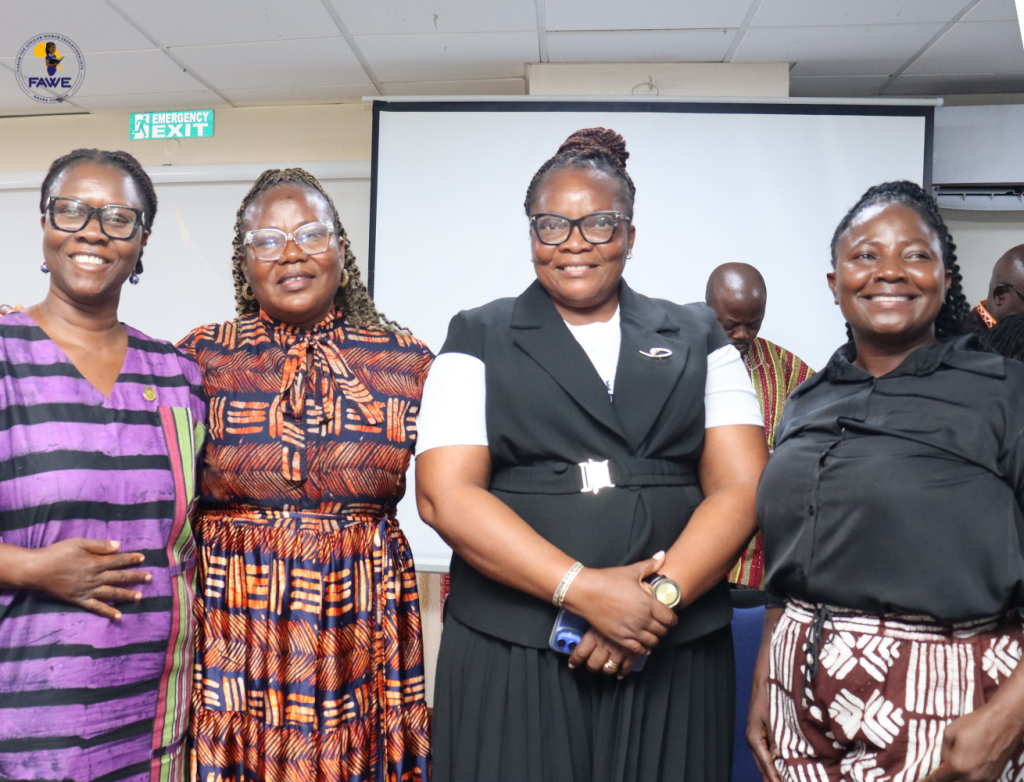
From policy alignment to institutional ownership and resource mobilization, the discussion reinforced a central truth that inclusive and quality TVET requires collective effort.
The day ended with an engaging open dialogue session, where participants shared practical experiences, challenges, and opportunities for translating GRP4TVET into action.
Day 2: From Insight to Implementation
Building on the strong foundation of Day 1, Day 2 focused on practical application and strategic alignment.
Participants explored how to operationalize the GRP4TVET Toolkit within their respective institutions, integrating its principles into classroom delivery, institutional frameworks, and policy implementation. The sessions emphasized actionable outcomes and measurable impact.
Through peer learning and collaborative discussions, participants co-created context-specific strategies to address real-world challenges, ensuring that the training translated into practical, scalable solutions.
Key Takeaways: A Collective Call to Action
- Gender-responsive TVET is essential for inclusive economic development
- The GRP4TVET Toolkit provides a clear, actionable framework for transformation
- Collaboration is critical for scale and sustainability
- The focus must now shift from dialogue to implementation
Conclusion
The Popularization of the GRP4TVET Training has catalyzed a shift from awareness to action. With strengthened partnerships, aligned stakeholders, and a shared vision, the pathway to a more inclusive TVET system in Ghana is firmly within reach.
Written By
Naomi Darko
Communication and Advocacy Officer
FAWE Ghana